
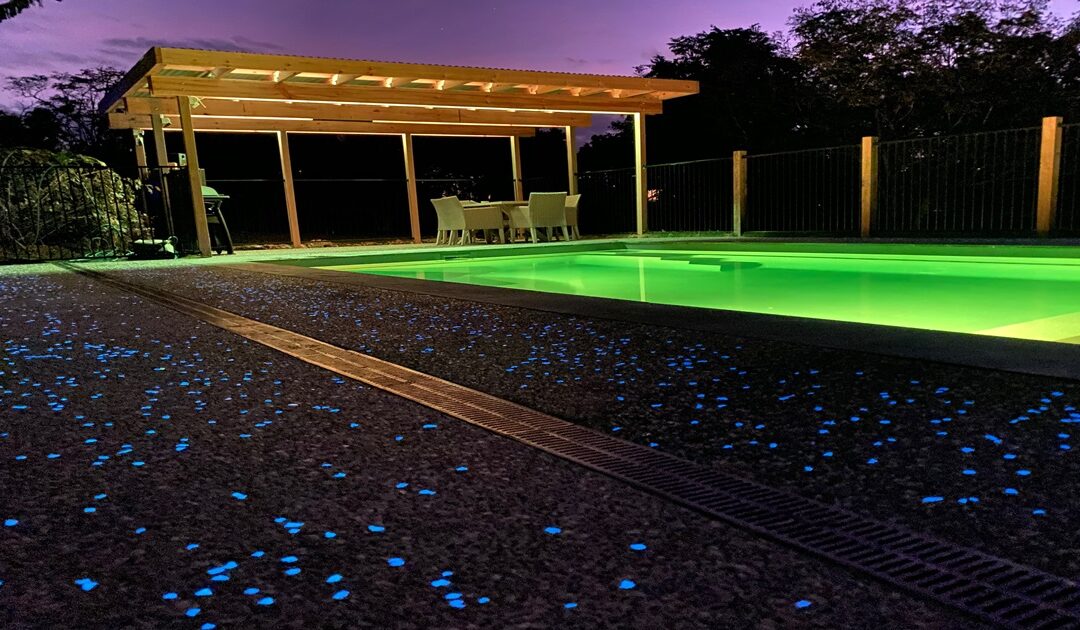
Outdoor design has moved far beyond simple garden lights and basic landscaping materials. Today, glow in the dark stones are helping homeowners, builders, designers, and landscapers create outdoor spaces that look beautiful during the day and continue to shine after sunset.
These clever stones absorb sunlight or strong artificial light during the day. Then, after dark, they slowly release that stored light as a soft glow. As a result, they can help highlight pathways, driveways, garden beds, pool areas, and decorative concrete features without electricity.
In this article, we’ll explain how glow in the dark stones work, where you can use them, and why they have become such an exciting choice for modern landscaping and concrete design.
What Are Glow in the Dark Stones?
Glow in the dark stones are decorative aggregates that contain photoluminescent compounds. In simple terms, these compounds absorb light and then release it slowly over time. This process creates a visible glow in dark areas.
Unlike novelty glow rocks used for small craft projects, professional-grade glow stones for concrete suit outdoor design, landscaping, and architectural use. Manufacturers often make them from durable polymer resins mixed with photoluminescent materials such as strontium aluminate. This material helps create a brighter and longer-lasting glow than many older glow products.
According to research published by IISTE.org, photoluminescent materials can store light energy and release it over time without electricity. Because of this, they can support low-energy and passive lighting designs.
Learn more about photoluminescent materials.
How Glow Stones Work
The science behind glow rocks is simple, but it is also very effective.
During the day, glow stones absorb photons from sunlight or strong lighting. These photons excite electrons inside the material. Then, when the light source disappears, the electrons slowly return to their normal state. As they do this, they release energy as visible light.
High-quality glow in the dark stones usually offer:
- Long-lasting glow duration
- Strong brightness after charging
- UV-resistant materials
- Durability for outdoor environments
- Compatibility with concrete and landscaping installations
Modern photoluminescent compounds, including strontium aluminate, glow brighter and last longer than many earlier glow materials. You can also find more scientific information about strontium aluminate on the National Institutes of Health website.
Because of these improvements, today’s glow stones for concrete can create visible light for up to 12 hours, depending on the amount and strength of light they absorb during the day.
Why Glow Stones Are Transforming Outdoor Design
Outdoor spaces now need to work well both day and night. However, many traditional outdoor lighting systems need wiring, power, bulbs, and ongoing upkeep.
By contrast, glow in the dark stones offer a simpler way to add soft light and visual interest. They do not replace strong safety lighting where full visibility is needed. However, they can add a beautiful ambient glow that improves the look and feel of an outdoor space.
Energy-Free Illumination
Glow stones do not need power, wiring, or batteries. Instead, they charge naturally from sunlight or artificial light. Then, after dark, they release a soft glow through the evening.
Low Maintenance
Because glow rocks have no wiring, bulbs, or moving parts, they need very little maintenance once installed. This makes them a practical option for gardens, pathways, concrete features, and hard-to-wire areas.
Subtle Ambient Lighting
Bright lights can sometimes feel harsh in outdoor spaces. However, glow stones create a softer effect. They can highlight edges, paths, and landscape details without overpowering the design.
Sustainable Design
Many designers now look for materials that reduce power use and support more sustainable outdoor spaces. Since glow stones do not need electricity to glow, they can work well in eco-conscious landscaping and construction projects.
Best Places to Use Glow in the Dark Stones
One of the biggest benefits of glow in the dark rocks is their flexibility. You can use them in many outdoor areas to create both practical and decorative effects.
Garden Pathways
Garden pathways are one of the most popular places to use glow stones. When you add them to gravel paths, stepping stone areas, or decorative borders, they create a gentle guide after dark.
As a result, the path becomes easier to see, while the garden also gains a unique visual feature.
Driveways and Walkways
Architects, builders, and concreters often use glow stones for concrete in exposed aggregate driveways, paths, and walkways. When mixed with decorative concrete finishes, the stones add subtle nighttime visibility without the need for extra light fittings.
This makes them a strong option for modern homes, commercial spaces, and outdoor areas that need both function and style.
Pool Surrounds
Pool areas can also benefit from glowing aggregates. By adding glow rocks to concrete around pools, designers can create beautiful light effects that improve the mood of the space after sunset.
In addition, the soft glow can help mark edges and pathways around outdoor entertaining areas.
Landscaping Features
Landscapers can use glow in the dark stones in many outdoor features, including:
- garden beds
- decorative borders
- rock gardens
- water features
- outdoor seating areas
As the sun sets, these areas shift from daytime garden features into glowing night-time details. This creates a smooth change from day to night and gives the landscape more depth.
Want inspiration? Browse our Glow Stones image gallery to view real project examples and see the possibilities firsthand.
How Glow Stones Are Used in Concrete
One of the most exciting applications of glow in the dark stones is in decorative concrete.
When embedded into concrete surfaces, glow stones can create glowing pathways, architectural accents, and illuminated patterns. This technique is often used in:
- exposed aggregate driveways
- polished concrete floors
- decorative concrete patios
- outdoor stairways
- architectural feature walls
Contractors typically seed glow stones for concrete into the surface during finishing. After curing and polishing, the stones remain partially exposed so they can absorb light and emit their glow.
These materials are engineered for durability, consistent glow performance, and compatibility with decorative concrete installations.
Create a Glow Feature in Your Next Project
Whether you are designing a modern landscape or installing decorative concrete, glow in the dark stones can dramatically enhance nighttime environments.
Schneppa Glass supplies high-quality glow stones used by builders, designers, and landscapers across Australia.
If you’re interested in this material, you can explore premium glow stones for concrete available from Schneppa Glass.
Explore Glow Stones for Concrete
Glow Stones vs Traditional Outdoor Lighting
Although outdoor lighting systems remain common, glow rocks offer several advantages over traditional lighting solutions.
| Feature | Glow Stones | Traditional Lighting |
| Electricity required | No | Yes |
| Installation complexity | Low | Moderate to high |
| Maintenance | Minimal | Bulbs and wiring |
| Energy consumption | None | Continuous |
| Aesthetic effect | Soft ambient glow | Direct illumination |
Because glow in the dark stones require no wiring, they are particularly useful in remote areas of landscaping projects where installing electrical infrastructure may be difficult or expensive.
Why Designers Choose Schneppa Glass Glow Stones
Professional designers and contractors often look for materials that combine durability, aesthetic appeal, and consistent performance. Schneppa Glass has become a trusted supplier of decorative aggregates used in architectural and landscaping applications across Australia.
Their glow stones are engineered using photoluminescent compounds that provide strong and reliable illumination after exposure to light. Additionally, these stones are designed to be compatible with modern decorative concrete techniques.
Many projects also combine glowing aggregates with other decorative materials such as crushed glass aggregate for textured concrete finishes.
For projects requiring colour variation, designers may also incorporate coloured crushed glass into decorative surfaces.
By combining these materials, contractors can create highly customized surfaces that transform dramatically after sunset.
The Future of Glow Stones in Architecture and Landscaping
As sustainable construction and creative landscape design continue to evolve, glow in the dark stones are likely to become an increasingly important material in outdoor architecture.
Urban planners and landscape designers are already exploring the use of photoluminescent materials for:
- public walkways
- bicycle paths
- parks and recreational spaces
- architectural installations
- public safety lighting
Because glow stones require no electricity, they offer an environmentally friendly way to enhance nighttime visibility while reducing energy consumption.
Final Thoughts
Outdoor environments don’t have to disappear when the sun goes down. With the right materials, landscapes and architectural features can become even more impressive after dark.
Glow in the dark stones offer a simple yet powerful way to introduce illumination into pathways, driveways, concrete surfaces, and garden designs. Their ability to absorb light during the day and release it gradually at night creates beautiful glowing effects that enhance both safety and aesthetics.
For designers, builders, and homeowners seeking innovative landscaping solutions, glow stones provide a unique combination of sustainability, durability, and visual impact.
Explore Premium Glow Stones from Schneppa Glass
If you’re planning a landscaping project or decorative concrete installation, high-quality glow stones can elevate your design to a completely new level.
Schneppa Glass supplies professional-grade glow in the dark stones used across Australia in landscaping, architectural concrete, and decorative applications.