
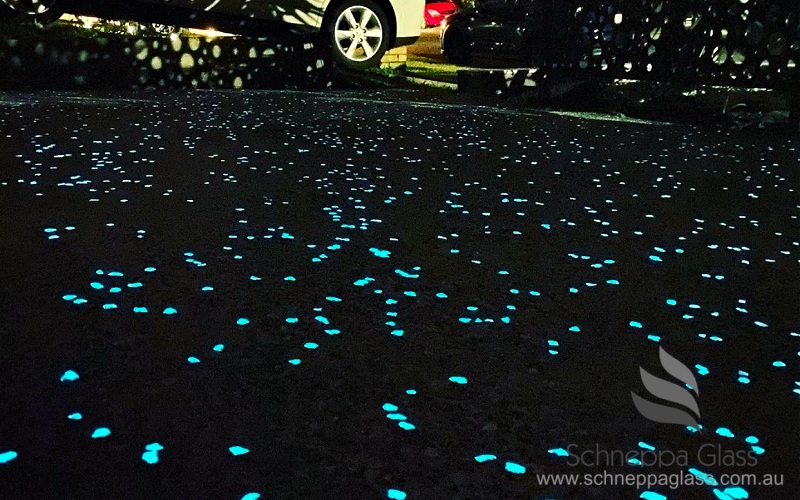
Concrete glow stones can turn an ordinary concrete surface into a feature that looks beautiful during the day and glows softly at night. They are often used in driveways, pathways, pool surrounds, polished concrete, exposed aggregate, benchtops and outdoor landscaping projects.
However, the final result depends on more than simply buying glow stones and adding them to wet concrete. To get the best outcome, you need to choose the right product, plan the seeding rate, think about light exposure and work with a concreter who understands the finish you want.
If you are planning to use concrete glow stones in your next project, this guide explains how they are installed, how much glow aggregate you may need and the common mistakes to avoid before the pour begins.
What Are Concrete Glow Stones?
Concrete glow stones are photoluminescent decorative aggregates that absorb light during the day and release a soft glow after dark. In simple terms, they charge when exposed to sunlight or suitable artificial light, then slowly release that stored energy when the surrounding area becomes darker.
Unlike standard decorative aggregate, concrete glow stones are chosen for both their daytime look and their nighttime effect. During the day, they can add colour, texture and interest to a concrete surface. At night, they create a subtle glow that can make paths, driveways, pool areas and landscape features feel more custom and inviting.
Schneppa’s PolyGlow™ glow stones for concrete are designed for decorative concrete and outdoor applications. They can be used in exposed aggregate, polished concrete, landscaping, concrete benchtops and outdoor feature areas.
Because they are used in real concrete applications, it is important to choose glow aggregate that is made for the job. Generic glow rocks may look similar online, but not all glow products are designed for concrete, outdoor use or long-term exposure.
How Are Concrete Glow Stones Installed?
Concrete glow stones are usually added during the concrete finishing process. The exact method depends on the type of surface, the concreter’s process and the final look you want to achieve.
In many cases, the glow stones are seeded or broadcast onto the surface while the concrete is still wet. Then, they are worked into the surface so they become part of the finished concrete rather than sitting loose on top. Depending on the project, the surface may later be exposed, ground, polished or washed back to reveal the decorative aggregate.
This step matters because glow rocks in concrete need to remain visible enough to charge and glow. If they are buried too deeply, they may not receive enough light. As a result, the glow effect may be weaker than expected.
Before choosing a finish, it can help to view a glow stones image gallery so you can see how glow stones may look in pathways, concrete features, driveways and outdoor spaces.
It is also worth discussing the project with your concreter before the pour. Glow rocks for concrete can look impressive, but the installation method has a big impact on the result. A little planning before the concrete arrives can prevent costly disappointment later.
Recommended Seeding Rates for Concrete Glow Stones
The seeding rate is one of the most important parts of planning a glow stone project. It affects the daytime appearance, the nighttime glow and the overall cost of the project.
As a general guide, Schneppa recommends around 120g per square metre for PolyGlow™ stones. However, some projects may use more if the goal is a stronger or denser glow effect.
For example, a subtle pathway may only need a lighter application, while a statement driveway or pool surround may benefit from a higher seeding rate. The right amount will depend on the size of the area, the finish, the desired glow intensity and the way the stones are placed.
If you use too little glow aggregate, the effect may look patchy or underwhelming. On the other hand, using too much may make the surface look busy and increase the project cost unnecessarily. Therefore, the best approach is to plan the quantity before installation and speak with your concreter about the desired result.
For broader decorative aggregate planning, Schneppa also has a helpful guide on how much glass to use in concrete.
Check Glow Stone Product Details Before You Pour
Planning a concrete project and not sure how much glow aggregate you need? Schneppa’s PolyGlow™ glow stones for concrete product page includes sizing, colour options, recommended seeding guidance and suitable applications to help you plan before the pour.
Whether you are creating a driveway, pathway, pool surround, polished concrete floor or landscaping feature, choosing the right glow stones early can help you achieve a better finish.
Polished Concrete vs Exposed Aggregate Glow Stones
Concrete glow stones can be used in both polished concrete and exposed aggregate applications. However, these finishes are different, so they need to be planned differently.
Polished Concrete Glow Stones
Polished concrete glow stones are usually revealed through grinding and polishing. This type of finish can work well for feature floors, benchtops, interior design elements and covered outdoor areas.
Because polishing removes layers of the concrete surface, the placement of the stones matters. If the stones are not placed correctly, they may not appear evenly once the surface is ground back. For this reason, polished concrete projects should be discussed carefully with the installer before the pour.
Polished concrete glow stones can create a premium finish, but they require planning, skill and the right product.
Exposed Aggregate Glow Stones
Exposed aggregate glow stones are often used in driveways, pathways, pool surrounds and outdoor concrete areas. In this type of application, the surface is treated or washed back to reveal the aggregate.
This method can create a textured decorative finish with visible glow stones near the surface. Because the stones are more exposed, they can receive light and release a glow after dark.
If you are using PolyGlow™ glow stones for concrete in an exposed aggregate surface, make sure the concreter understands the desired placement, density and finish before the concrete is poured.
Choosing the Right Glow Aggregate for Your Project
Not all glow aggregate is created equal. Some products are designed for crafts, loose decoration or novelty use, while others are made for concrete and outdoor applications.
When choosing glow aggregate, consider the following:
- Is it suitable for concrete?
- Is it designed for outdoor use?
- What size are the stones?
- Are the glow compounds coated on the surface or infused throughout the material?
- Is the product suitable for polished concrete or exposed aggregate?
- Does it come from a supplier who understands decorative concrete?
- Is it safe, non-radioactive and suitable for the intended application?
Schneppa supplies a wide range of recycled glass products for decorative concrete, landscaping, design and feature finishes. This makes it easier to choose materials that suit the look and purpose of the project.
When comparing glow rocks for concrete, do not focus on price alone. A cheaper option may not perform well in concrete, especially if it is surface-coated or not designed for outdoor exposure.
Can You Mix Glow Stones With Other Aggregates?
Yes, concrete glow stones can often be used alone or paired with other decorative aggregates. This can create a more customised finish, especially when you want daytime colour as well as a nighttime glow.
For example, you may choose to combine glow stones with coloured glass aggregate to create a brighter decorative surface during the day. Alternatively, clear crushed glass or mirror glass may be used to add sparkle, contrast and texture.
This can work well for:
- Decorative driveways
- Garden pathways
- Pool surrounds
- Concrete benchtops
- Outdoor entertaining areas
- Landscaping features
- Public spaces and commercial projects
However, mixing materials should be done carefully. The colour, size and placement of each aggregate will affect the final look. Therefore, it is best to plan the design before installation rather than deciding on-site.
Common Mistakes to Avoid With Concrete Glow Stones
Concrete glow stones can look beautiful when installed correctly. Still, a few common mistakes can reduce the glow effect, affect the finish or make the project less successful.
Using Glow Rocks That Are Not Designed for Concrete
One of the biggest mistakes is using generic glow rocks that are not made for concrete. Some glow products are designed for craft projects, fish tanks, garden pots or loose decoration. They may not hold up well in outdoor concrete applications.
For best results, choose PolyGlow™ glow stones that are designed for concrete, exposed aggregate, polished concrete and landscaping projects.
Using Too Little Glow Aggregate
Another common issue is under-seeding. If too few stones are used, the glow may look sparse and uneven. While a subtle effect can be beautiful, it should still look intentional.
Before the pour, calculate the area and decide whether you want a light, medium or stronger glow effect.
Placing Stones Too Deep in the Concrete
Glow stones need light to charge. If they are pressed too deeply into the concrete, they may not receive enough light exposure. As a result, they may not glow as strongly.
The stones should be close enough to the surface to absorb light while still being properly embedded in the concrete finish.
Installing in Areas With Poor Light Exposure
Glow stones work best when they receive enough light during the day. If they are placed under dense shade, beneath heavy tree cover or in a dark corner with little sunlight, the glow effect may be reduced.
This does not mean shaded areas cannot use glow stones. However, expectations should be realistic, and the project should be planned around available light.
Research on photoluminescent materials shows that long-afterglow materials rely on light absorption and release. Therefore, the charging environment plays an important role in performance.
Expecting Glow Stones to Replace Outdoor Lighting
Glow in the dark concrete aggregate is decorative. It can add atmosphere and help define a space, but it should not replace proper safety lighting.
For steps, pool areas, driveways or public walkways, use suitable outdoor lighting where visibility and safety are important.
Choosing Colour Without Considering the Nighttime Effect
Some colours may look different during the day compared with how they glow at night. Therefore, it is worth reviewing the available colour options carefully before choosing.
Think about both the daytime design and the nighttime effect. This will help you choose a colour that works with the concrete, surrounding landscape and overall project style.
Not Speaking With a Concrete Professional
Even the best glow stones can disappoint if the installation method is wrong. Concrete work is technical, and the finish depends on timing, placement, surface treatment and experience.
Before using glow stones, speak with a concreter who understands decorative aggregate finishes. This is especially important for polished concrete, exposed aggregate and feature concrete projects.
Where to Buy Concrete Glow Stones in Australia
If you are looking for glow stones Australia-wide, Schneppa Recycled Crushed Glass supplies PolyGlow™ glow stones for concrete, landscaping, polished concrete, exposed aggregate, benchtops and outdoor design projects.
PolyGlow™ stones are available in several colours, including options such as Sky Blue, Marine, Neo Green, Purple Crush, Tri-Colour Mix and Quattro Mix. Each colour can create a different look, so it is worth reviewing the product options before ordering.
The technology behind modern glow materials has improved significantly over time. NASA Spinoff has discussed strontium aluminate glow technology as a non-radioactive glow material used in safety-related applications, which helps explain why this type of glow technology is commonly used in modern long-afterglow products.
You can buy glow stones for concrete in Australia through Schneppa’s PolyGlow™ product page and review colours, sizing, seeding guidance and suitable applications before ordering.
Related Resources
To help plan your project, explore these useful resources:
- View PolyGlow™ Glow Stones for Concrete
- Browse the Glow Stones Image Gallery
- Explore Recycled Glass Products
- Learn How Much Glass to Use in Concrete
- View Coloured Glass Aggregate
Final Thoughts: Get the Best Result From Concrete Glow Stones
Concrete glow stones can create a unique surface that looks attractive during the day and glows softly at night. They are a great option for driveways, pathways, pool surrounds, polished concrete, exposed aggregate, benchtops and landscape features.
However, the best results come from good planning. You need to choose concrete-grade glow stones, use a suitable seeding rate, think about sunlight exposure and work with a concreter who understands the finish you want.
Most importantly, glow stones should be treated as part of the design process, not as an afterthought. When they are planned correctly, they can add texture, atmosphere and personality to concrete areas that might otherwise feel plain.
Shop PolyGlow™ Glow Stones
Ready to create a concrete finish that looks beautiful during the day and glows softly at night?
Explore Schneppa’s PolyGlow™ glow stones for concrete, view the available colours and speak with the team before starting your driveway, pathway, pool surround, polished concrete or landscaping project.
A little planning now can help you create a decorative concrete finish that feels unique, practical and memorable long after the sun goes down.